
18 June 2026 (closed)
Jakarta Composite Index (6,172.34) -48.40 -0.78%
How WR Trading's Mentorship Program Simplifies Day Trading for Everyone
Day trading has a reputation problem. Ask most people what they picture when they hear the phrase, and you'll get the same answer: multiple monitors, constant stress, a finance degree, and probably a lot of money you can't afford to lose.
That reputation isn't entirely wrong. Underprepared traders do lose money, often quickly. But the complexity itself? That's mostly a myth created by traders who never had a clear system to begin with. With the right framework, day trading becomes a repeatable process, not a daily guessing game.
This article breaks down how structured trading education, specifically the approach used in WR Trading's mentorship, strips away the unnecessary complexity and gives everyday people a realistic path to consistent, profitable trading.

The Real Reason Most Beginners Struggle
Before getting into solutions, it's worth being honest about the problem. Most beginner traders don't fail because markets are too complicated. They fail because they were never taught a focused, repeatable approach.
The typical beginner's journey looks something like this: watch some YouTube videos, open a brokerage account, try a few strategies pulled from different sources, lose money, try again with a different indicator, lose more money, and eventually conclude that trading "just isn't for them."
The issue isn't talent. It's the absence of structure. When you're trading five different markets, using four conflicting indicators, and switching strategies every two weeks, you're not learning. You're just accumulating losses with extra steps.
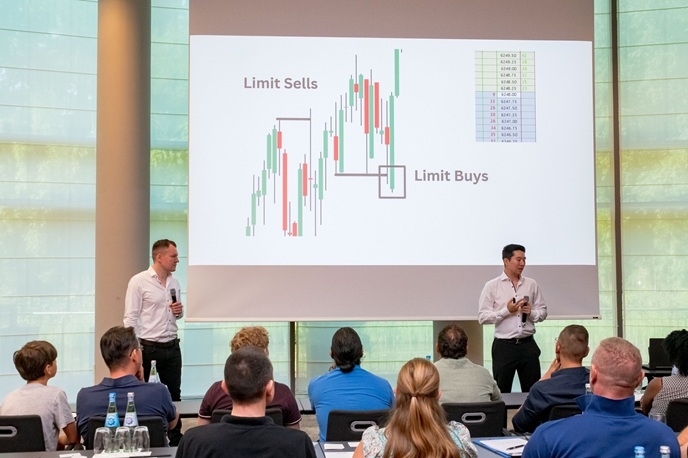
The Trader Andre Witzel, who founded WR Trading after more than a decade of trading experience, describes this pattern repeatedly when talking about why he built the mentorship in the first place. The traders he encountered weren't failing because they lacked dedication. They were failing because no one had given them a system that was actually designed to be followed consistently.
What Simplification Actually Looks Like in Practice
"Simplified" doesn't mean watered down. It means removing everything that doesn't serve the strategy and being disciplined enough to stick with what does.
WR Trading's approach to simplification works on a few levels:
- One market at a time. The curriculum focuses primarily on high-liquidity markets like the EUR/USD and S&P500. These markets offer consistent volume, tight spreads, and enough daily movement to find quality setups without having to scan dozens of instruments every morning.
- One core strategy. Rather than teaching a library of setups, the program builds understanding around a specific method: wick-based price action on the 1-minute chart, with the anchored VWAP as the only indicator. Mastering one approach deeply is more valuable than knowing ten approaches superficially.
- Clear rules for entry and exit. Every trade has defined criteria. There's no ambiguity about whether a setup qualifies. Either it meets the criteria or it doesn't, and if it doesn't, you don't take it.
This kind of structure might sound rigid, but for most beginners, that rigidity is exactly what's missing. When the rules are clear, decision-making under pressure becomes significantly easier, and the emotional component of trading, which destroys more accounts than bad strategy ever does, becomes much more manageable.
The Progression System: Learning Before Risking
One of the more practical aspects of WR Trading's mentorship is how it sequences the learning process. New traders aren't thrown into live markets on day one. The program moves through distinct phases deliberately.
The first phase is entirely focused on reading charts without placing trades. Students learn to identify setups, track what would have happened, and build pattern recognition before any real money is involved. This might sound slow, but it's the kind of foundation that prevents the costly early mistakes most self-taught traders make.
From there, students move into demo trading, applying the strategy in real market conditions with simulated capital. The goal in this phase is consistency, not just occasional wins. Getting a demo account to positive performance over two to three months is a realistic, measurable milestone before transitioning to a live account.
The final phase brings in advanced tools and techniques, including the use of level-2 data for timing and exits, and access to weekly live webinars run by profitable traders. JT Rong, co-founder and co-lead of the mentorship, actively participates in these sessions, which means students are learning from someone who is still actively trading, not just teaching theory from years ago.
According to Investopedia's overview of trading education, one of the most overlooked components of trading success is psychological discipline, knowing when to sit on your hands. WR Trading's phase-based system directly addresses this by ensuring traders develop the right habits before the stakes are real.
Time Commitment: Trading Around a Real Life
One of the most persistent myths about day trading is that it requires your full attention all day. For certain trading styles, that's true. For the approach WR Trading teaches, it isn't.
The 1-minute chart strategy is designed for focused, time-limited sessions. Most traders spend between one and two hours in front of the market per day, executing just one to two trades per session, typically catching the most active part of the trading session and stepping away once the setup conditions are no longer present.
This matters for two reasons. First, it makes the program accessible to people who work, have families, or simply can't commit to watching screens all morning. Second, and less obviously, it improves trading performance. Traders who set a time limit are far less likely to overtrade, force setups, or revenge-trade after a loss, all behaviors that compound losses and increase stress.
For anyone evaluating whether trading is realistic given their schedule, two to three focused sessions per week is a much more honest starting point than the all-day commitment most beginner courses imply.
Honest Limitations Worth Knowing
No mentorship program turns everyone into a profitable trader, and WR Trading doesn't claim otherwise. Trading involves real risk, and even traders with solid systems go through losing streaks. The U.S. Securities and Exchange Commission's investor education resources are worth reviewing if you want an unbiased look at what active trading involves from a regulatory standpoint.
What a well-structured program does is reduce the time it takes to develop real competence and significantly cut down on the avoidable mistakes that drain beginner accounts in the first year or two. The value isn't a shortcut to profits. It's a shorter path from confused beginner to trader who actually knows what they're doing.
That distinction is important. Anyone evaluating a trading mentorship should be skeptical of programs that promise fast results or guaranteed returns. The honest version of what good coaching delivers is clarity, accountability, and a tested framework, all of which WR Trading's program is built around.
Bottom Line
Day trading doesn't have to be the complicated, high-stress endeavor most people imagine. The complexity that most beginners experience isn't inherent to trading. It's the result of trying to learn without a coherent system.
WR Trading's mentorship program works because it removes the noise: one market, one strategy, clear rules, and a progression that builds real skills before real money is at risk. Whether you're completely new to trading or you've been spinning your wheels for a year with inconsistent results, that kind of structure is usually what makes the difference.
If simplifying your approach to the market sounds like something worth exploring, it's a program worth looking into.