
18 June 2026 (closed)
Jakarta Composite Index (6,172.34) -48.40 -0.78%
Cultural Economics of Indonesia
Often, economic analyses focus strictly on GDP numbers and completely miss the human or cultural element. Culture and the economy are in fact constantly shaping, driving, and reacting to one another. Therefore, we cannot fully understand a country's economic landscape if we do not know much about its societal values, traditions, daily habits and mindset of the people. So, what are the distinct cultural traits that have sculpted the Indonesian economy into what it is today?
Consumer Culture
Perhaps one of the most visible traits is Indonesians' deeply ingrained desire for shared experiences. While a weekend in the West might center around the home, a typical Indonesian weekend involves gathering the extended family or peer group to head out to a shopping mall, cafe, or culinary hotspot. Food, drinks, and snacks aren't just sustenance; they are the currency of socialization.
This collective eagerness to go out means the average consumer is highly responsive to experiential retail and promotional triggers. Today, this is turbocharged not just by credit card discounts, but by the seamless integration of e-wallets and "PayLater" digital micro-loans that make instant gratification incredibly easy.
Furthermore, when an Indonesian travels (whether it is a domestic business trip or a family vacation) there is an unwritten, strict cultural rule that they must bring back oleh-oleh (souvenirs) for their office colleagues, extended family, and neighbors. Data from Indonesia's Statistical Office (BPS) show that Indonesians made a whopping 1.2 billion domestic trips in 2025. Therefore, if around IDR 100,000 per trip is spent on oleh-oleh alone (which might be a conservative estimate), this would translate to around USD $6.7 billion in total money that is rotated. Obviously, this 'cultural tax' acts as a massive stimulus for local micro, small and medium-sized businesses. There are in fact entire micro-economies, specialized bakeries, and massive retail centers that exist solely to serve the oleh-oleh market (for example, the bakpia shops in Yogyakarta).

Related to traveling, Indonesia has the mudik phenomenon when during the Lebaran (Idul Fitri after the Ramadan month) dozens of millions of people travel back to their places of origin to spend a couple of days there. It creates the single largest predictable macroeconomic (retail sales) spike of the year. The government-mandated holiday (Tunjangan Hari Raya, THR) helps to inject billions of rupiah into the economy, which is almost immediately spent on new clothes, home renovations, hampers, and travel.
Another feature, which is related to limited spending power of an overwhelming majority of the Indonesian population (meaning consumption is dictated by daily cash flow rather than monthly budgeting), is that many Indonesians prefer buying things in single-use or very small quantities (instead of bulk-buying which is more common in the West). This created the so-called 'sachet economy' where everything (from shampoo and coffee to cooking oil and medicine) is sold in tiny, affordable packets at local shops (warungs).
Community
Closely tied to this consumer culture is the sheer weight of community in Indonesian life. Whether it is the local neighborhood (RT/RW), office colleagues, or religious circles, maintaining social bonds is a cultural priority. In economic terms, this collectivism transforms individual consumers into a massive, interconnected network where word-of-mouth, viral social media trends, and group buying shape entire market demands.
Perhaps, the importance of community is related to the historic failure of state institutions to provide enough social safety nets (such as healthcare and pension schemes). This means that many Indonesians are dependent on 'donations' by the members in their communities. When your neighbor gives birth, when your colleague's father passes away, or when someone in your religious community marries, then you give them some money.
Furthermore, the arisan tradition plays an important role in Indonesian society. Arisan involves a group of people (let's say, the housewives in a neighborhood) who regularly contribute a fixed amount of money (or goods) to a shared pot. At each gathering (for example, once a month), the entire pooled sum is awarded to one member, typically chosen by lottery, until everyone in the group has had a turn. This is actually a form of traditional communal micro-finance. The person who receives the money typically spends it on something that is relatively expensive.
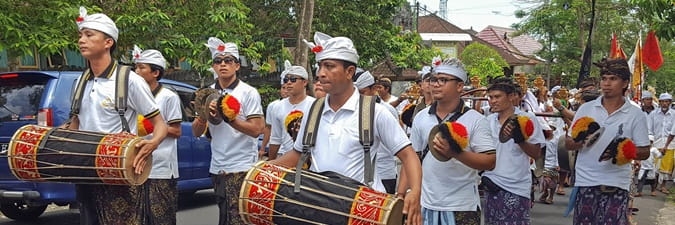
The wedding (particularly the wedding reception) is an interesting example. Whereas in the West, a wedding often has a limited number of guests, an Indonesian wedding is likely to be visited by hundreds of guests. The wedding reception is a big event, with enormous quantities of food for the guests (the catering business is indeed an interesting business in Indonesia). This is partly what makes it an expensive affair. However, as wedding guests drop some money in a dedicated box at the entrance, the total amount of donations often equals around 75 percent of the wedding reception costs.
Lastly, Indonesian retail is deeply social, too. This manifests in how Indonesians shop online. Indonesia has become a global epicenter for 'social commerce' where purchasing decisions are hammered out in WhatsApp groups, Telegram channels, and live-stream comment sections. If a trusted member of a community group recommends a product, it carries far more weight than any traditional corporate advertisement.
Rich Food Culture
Food is a cornerstone of Indonesian life, acting as both a primary social lubricant and a massive economic engine. Conversations routinely center around food, new culinary discoveries, and favorite local restaurants. Eating together is the ultimate community-building activity. However, unlike in Western nations where dining out is a costly luxury reserved for special occasions, eating out in Indonesia is an everyday reality for all socioeconomic classes.
This is driven by an incredibly vibrant informal economy. Millions of micro-enterprises, ranging from street-side carts (kaki lima) and small family eateries (warungs) to modern cafes, engage in fierce competition. Because operational overhead is low and competition is high, prepared meals remain incredibly affordable—often rivaling or beating the cost of buying groceries and cooking at home.
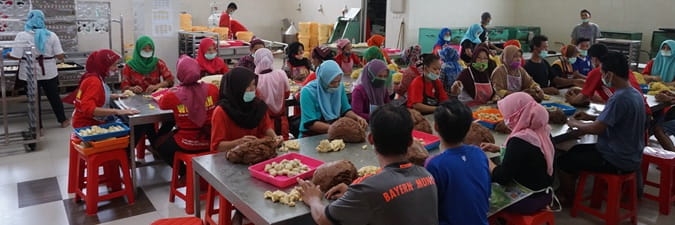
As a result, food is woven into the fabric of every social ritual. When neighborhood housewives gather for the monthly arisan, the table is invariably laden with a vast spread of traditional snacks (jajanan pasar) and drinks. On a larger scale, this cultural requirement to feed the community has given rise to a massive, highly resilient catering and food-service industry. Whether it is a corporate seminar, a religious gathering, or a multi-thousand-guest wedding, the economic footprint of Indonesia's food culture is staggering, making the food and beverage (F&B) sector one of the most reliable drivers of domestic consumption.
This cultural obsession with food has found a powerful multiplier in the digital economy. The meteoric rise of super-apps like Gojek and Grab has hyper-monetized Indonesian food culture through instant delivery services (GoFood and GrabFood). By digitizing millions of tiny street vendors, these platforms have made affordable culinary indulgence available at the touch of a button. Whether it is an office worker ordering a round of iced coffee for their colleagues as a customary treat, or a family ordering a late-night feast at home, the intersection of tech and taste has turned food delivery into a multi-billion dollar economic pillar.
Awareness of Environmental and Resource Sustainability
While Indonesia's consumer culture successfully drives short-term GDP growth, there is also a distinct structural challenge when viewed through the lens of resource sustainability. For many expatriates and external analysts observing daily life in regions such as Yogyakarta, a paradox exists: there is a society deeply committed to social harmony but often displaying a profound lack of awareness regarding environmental preservation and energy conservation.
This can be seen in domestic habits. In many Indonesian households, there is a systemic tolerance for resource waste, such as leaving lights and air conditioners running in unoccupied rooms, or keeping a cooking stove at maximum flame long after the water has reached the boiling point. Perhaps, part of the problem has been the decades of government energy subsidies, which historically protected the Indonesian consumer from the true cost of electricity and fuel, detaching consumption from consequence, and fostering a mindset of perpetual resource abundance.

A similar phenomenon is visible in the public sphere with plastic waste. The 'sachet economy' discussed above makes consumer goods accessible to all income levels and simultaneously produces a mountain of single-use plastic. Coupled with a traditional cultural reliance on organic, biodegradable packaging (such as banana leaves) from past generations, the rapid shift to modern plastics occurred without an accompanying evolution in civic waste disposal habits. Throwing away plastic on the street or burning it in local neighborhoods is often viewed through a lens of immediate convenience rather than long-term environmental degradation. Such 'bad behavior' is also supported by the lack of public waste management.
In economic terms, this shows that Indonesia is still adjusting to the idea of resource efficiency. Historically, because economic security was volatile, comfort and success were culturally signaled by the visible use of resources (such as keeping a home brightly lit or having an abundance of goods on display). Conservation, however, requires people to look past their immediate comfort and think about long-term sustainability. As Indonesia moves toward becoming a high-income nation, bridging this cultural gap between fast consumption and environmental responsibility will be critical. If the country wants its economic growth to last, it must find a way to balance modern consumption with better management of its resources.
Young, Tech-Savvy Population
While traditional social circles like arisan shape localized consumption, the macro-engine driving Indonesia's economy into the future is its young, hyper-connected demographic that is showing impressive appetite for digital technology. Unlike many Western nations facing aging populations, Indonesia is experiencing a demographic dividend (with the median age of Indonesia being around 31-32 years, implying half of the population is younger than 31-32 years). These younger generations are not just using technology; they are reshaping the country's entire commercial landscape.
With internet penetration now soaring past 81 percent, Millennials and Gen Z boast an adoption rate of nearly 90 percent. Because this youthful demographic essentially skipped the desktop computer era and went straight to smartphones, Indonesia has become a mobile-first laboratory for global tech.

This digital savviness has supercharged the national e-commerce market, pushing its Gross Merchandise Value (GMV) near the USD $100 billion mark. However, the way young Indonesians shop reflects their underlying collectivist culture. Rather than shopping via static, isolated websites, they gravitate toward 'video commerce' on platforms such as TikTok and Instagram Live. In fact, video commerce transactions have experienced a near-90 percent year-over-year surge. To a young Indonesian, online shopping is a form of entertainment and a shared social experience.
Furthermore, this youth-driven tech boom has solved a historic economic hurdle: financial inclusion. Traditionally, millions of Indonesians were unbanked, lacking access to formal credit. Today, tech-savvy youth are bypassing traditional banks entirely. They rely on digital e-wallets, QRIS (the universal national QR code payment system), and Buy Now, Pay Later micro-loans. By removing the friction of cash, technology has allowed the inherent Indonesian desire to consume, share, and socialize to happen at lightning speed, 24 hours a day.
Hierarchic Structure
The cultural concept of Bapakisme (Fatherism), referring to the situation where a patriarchal leader or 'Bapak-figure' expects absolute deference and loyalty in exchange for patronage and care, is mirrored in Indonesia's macroeconomic landscape. The economy is not a decentralized field of equals. Instead, it is highly centralized, top-down, and dominated by giant institutions that act as the supreme 'Bapak' figures of the market.
This top-down structure manifests in two main pillars: (1) state-owned enterprises (BUMN), and (2) massive private conglomerates. Through BUMNs, the government directly commands the strategic heights of the economy. These are not just utilities but they are commercial titans. Indonesia's state-owned enterprises manage assets equivalent to over half of the nation's GDP. The largest banks (such as Mandiri and Bank Rakyat Indonesia), energy giants (Pertamina and Perusahaan Listrik Negara), mining giants (Aneka Tambang), and infrastructure companies (Adhi Karya or Waskita Karya) are all state-controlled. Just like a traditional Bapak who takes responsibility for his family, these companies carry a double mandate: they must turn a profit, but they must also act as 'agents of development'. This structure also makes sure that the Indonesian state stays in control of crucial assets.
Where the state does not step in, a handful of family-run, multigenerational private conglomerates take over. Elite corporate families control the vast majority of the country's private assets, heavily dominating core industries like agribusiness (palm oil), telecommunications, tobacco, and property development.
These conglomerates function much like extended family dynasties. Ultimate authority remains concentrated at the top with the founding patriarch (or their immediate heirs). This extreme concentration of corporate power creates a top-heavy market structure where mid-sized companies often struggle to scale up, leaving the economic landscape divided between a few high-powered giants and millions of micro-entrepreneurs (UMKM).
Ultimately, Bapakisme provides the Indonesian economy with immense coordination speed and stability during crises, as decision-making is concentrated in very few hands. However, it also means that economic power behaves like a traditional family hierarchy: highly centralized, heavily reliant on personal relationships, and protective of its status at the top.
This also implies that wealth is concentrated at the political/corporate top of society. Recent economic studies highlight a striking reality: Indonesia's 50 richest individuals control as much wealth as the poorest 55 million citizens (which equals roughly 20 percent of the entire population). This extreme concentration is the natural byproduct of a corporate Bapakisme system. When a small circle of elite families dominates high-margin, capital-intensive sectors like palm oil, mining, and banking, the vast majority of the population is left to operate in the ultra-competitive, low-margin informal economy.
Indeed, the micro, small and medium sized enterprises together account for 99 percent of the total amount of enterprises that are active in Indonesia and absorb roughly 97 percent of the entire Indonesian workforce, but only contribute about 60 percent to Indonesian GDP.
This page was last updated on 20 June 2026